
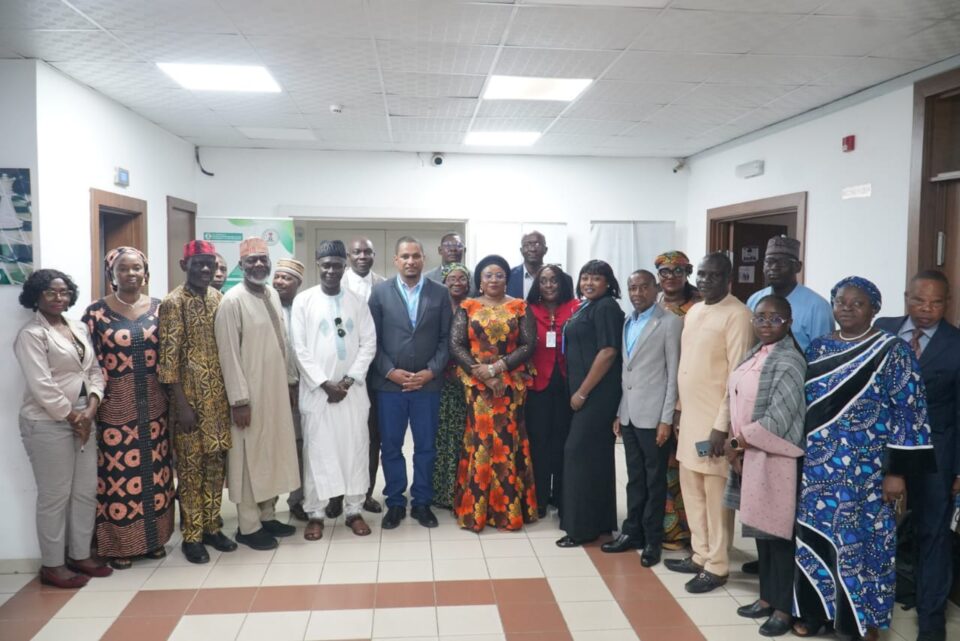
The Federal Ministry of Livestock Development has commenced discussions with the United Nations Industrial Development Organization (UNIDO) on potential areas of technical collaboration to strengthen livestock identification and traceability, food safety, laboratory capacity, certification and Nigeria’s readiness for increased international trade in livestock products.
The engagement, which brought together officials of the Ministry and UNIDO, focused on practical interventions that can support the Federal Government’s efforts to build a more efficient, transparent and globally competitive livestock sector.
Speaking during the engagement, the Permanent Secretary of the Ministry, Dr. Chinyere Ijeoma Akujobi, said animal identification and traceability would be critical to the future growth of the sector, particularly as Nigeria works towards expanding livestock production and exports.
“No trading partner will take any piece of meat from you if you don’t have a system capable of tracing livestock and livestock products through the value chain,” she said.
She added that quality and safety measures should not be driven by exports alone, but must protect Nigerian consumers. “Whatever we are doing should cut across products for both international and domestic markets,” Dr. Akujobi emphasised.
She noted that the Ministry was already working towards establishing a clear policy framework for animal identification and traceability and would welcome UNIDO’s technical input on infrastructure, software and capacity building.
The Permanent Secretary also sought UNIDO’s experience on practical identification technologies, including tags and microchips, taking into account affordability, available equipment and long-term sustainability for farmers.
The Ministry further identified the development of disease-free zones or compartments, training of federal and state veterinary inspectors, strengthening biosecurity and upgrading laboratory capacity as areas requiring attention as Nigeria expands its livestock export ambitions.
Presenting UNIDO’s areas of potential support, the UNIDO Regional Programme Manager, Adalberto Carvalho Santos Vieira, said the organisation could assist Nigeria in deploying digital technologies for livestock identification and traceability, linking animal identification to databases to strengthen animal health, build consumer confidence and facilitate access to export markets.
“UNIDO has successfully worked on livestock identification and traceability systems in other nations. We believe we can support the deployment of digital tracking technology to guarantee animal health, build consumer trust and open doors to related exports,” the UNIDO representative said.
The organisation also indicated its readiness to support testing and food safety systems, including laboratory capacity, inspector training and certification processes, while helping to assess existing national and regional capacities and identify priority gaps.
A key expected outcome of the proposed partnership is to strengthen Nigeria’s capacity to export honey, red meat and other livestock-related products to international markets by ensuring that products can be properly traced, tested, certified and shown to meet applicable international requirements.