
By Dayo Omoogun
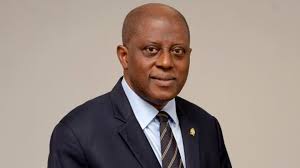
How time flies! It’s been 3 years just like yesterday since the current Central Bank Governor Dr. Olayemi Cardoso was appointed to the office and saddled with the huge responsibility of cleaning the Augean stable that the bankers’ bank had become and return the national economy to safety from the dangerous cliff edge where it was hanging.
At the time, for many Nigerians and indeed international partners as well as analysts, the feeling was let’s watch and see.
Right now, many people from across the world can testify that indeed Daniel has come to judgement and a Messiah has come to the rescue!
Over the past year in particular Nigeria’s financial ecosystem has undergone a comprehensive transformation. Through deliberate policy shifts, regulatory overhauls, and infrastructural modernization, the Central Bank of Nigeria (CBN) and key stakeholders have executed a strategy aimed at building stability, driving digital innovation, and bolstering international investor confidence.
From recapitalizing commercial banks to bolstering foreign exchange buffers past historic milestones, this feature article seeks to take a look at a few of the policies and reforms embarked upon by Cardoso and Co that are making so much difference and changing the ugly narrative which they inherited at the beginning of their journey.
A stable macroeconomy requires a well-capitalized, soundly governed banking sector capable of absorbing shocks and driving domestic growth.
One of the highest points of this Cardoso phenomenon is the banking recapitalization exercise which was successfully concluded on 31st March, 2026 with 33 banks meeting revised minimum capital requirements. The sector raised approximately ₦4.65 trillion in fresh capital, with 72.55% sourced locally, reinforcing balance sheet capacity and domestic market confidence. Today, Nigeria’s banking sector sits on a strong base, better positioned to support capital intensive ventures including manufacturing which requires long term funds at cheap cost.
The introduction of the DSIB Succession Framework set clear governance standards for the orderly succession of CEOs across Domestic Systemically Important Banks, ensuring institutional stability.
The approval of the Bank of Industry’s (BOI) Non-Interest Banking Window is a critical indicator of expanded access to non-interest financial products as well as intentional well thought out deepening of financial inclusion for underserved enterprise segments.
Even cynics would concede that the Cardoso- led management of the Apex bank has done well in bringing light out of the darkness that had practically swallowed our forex sector.
The bank’s modernisation of the sector is restoring market credibility, enhancing liquidity, and attracting sustainable investment flows which are critical to national economic rejuvenation.
Notable developments that have shaped the redirection of the sector include the release of the Fourth Edition of the Foreign Exchange Manual which stipulates updated guidelines aimed at enhancing transparency, operational efficiency, and market-driven price discovery; the restructuring of Bureau De Change granting them structured access to FX through Authorized Dealer Banks, integrated with the FX BDC Purchase Tracker for real-time monitoring and compliance oversight.
The leadership has also done slot to enhance capital flows and remittances.
To liberalise the sector, International Oil Companies were permitted to repatriate 100% of export proceeds via authorized dealer banks
New naira-settlement protocols were established for International Money Transfer Operators (IMTOs) to improve traceability and transparency in remittance channels.
Monitoring across the oil and gas export value chain was strengthened through the allocation and integration of additional crude-oil export terminals.
Emma Onyema, an Abuja based economist is particularly excited by the reforms in the digital payments sector and hails the Payments Systems Vision 2028 which was launched on the 1st of June this year as the way to go. Nigeria’s rising profile as a global leader in digital payments is traceable to robust infrastructure upgrades, heightened security, and agent network supervision which has been prioritised in the current dispensation, more than ever before.
Indeed, it is noteworthy that the PSV is anchored on Interoperability, Security, Inclusion, Innovation, Trust, and Collaboration, as the guiding strategy for the nation’s digital economy.
Agent banking and Point of Sale have not been spared by the gale of reforms as several measures such as mandatory geolocation tracking, elevated transaction controls, stricter agent oversight, and enhanced consumer protection mechanisms.
Mandatory geo-fencing of PoS and dual-connectivity mandates were deployed to reduce transaction failure rates and minimize fraudulent activities. Upgraded digital payment security protocols granted consumers direct control over transaction limits and payment preferences, backed by advanced device authentication and real-time fraud monitoring tools.
In all, several stakeholders have expressed solidarity with the Governor and his team. Dr. Anjorin Oluyole a public affairs analyst says “the best way to appreciate where we are is to compare it to where we are coming from.”
As far as Dr. Samson Simon, an Economist and lecturer with Baze University is concerned, all the bank’s reforms are laudable. According to him, “CBN Governor Olayemi Cardoso has embarked on a lot of reforms to give the monetary authorities the teeth they need to deliver on their mandate, the overarching being “price stability”.
Let us hear the conclusion of the whole matter from the Governor himself as expressed Tuesday at the MPC meeting
This is 36 months, three years precisely, that we assumed leadership role in the CBN. And, like all things, it is a pretty good time to look back and reflect.”
“In terms of context, we need to remember where we were coming from. We were coming from a place where confidence had been lost in the bank and in the country.
“That was manifested very clearly from the confidence that was lost in our currency.
“This was a time when our currency was regularly depreciating. You could not plan, and people panicked, and a lot of people externalised all they could.
This piece does not pretend to be exhaustive as there is still so much to highlight and commend in the scintillating performance of Dr. Olayemi Cardoso and his team.
It is most gratifying to note that the work of the Central Bank of Nigeria has put back the country into reckoning and restored her to a respectable place in the comity of nations.